82% of US companies with remote or hybrid teams lose up to 30% of billable time due to poor visibility into how work time is spent.
Take a 3-minute assessment to uncover what’s costing you thousands.
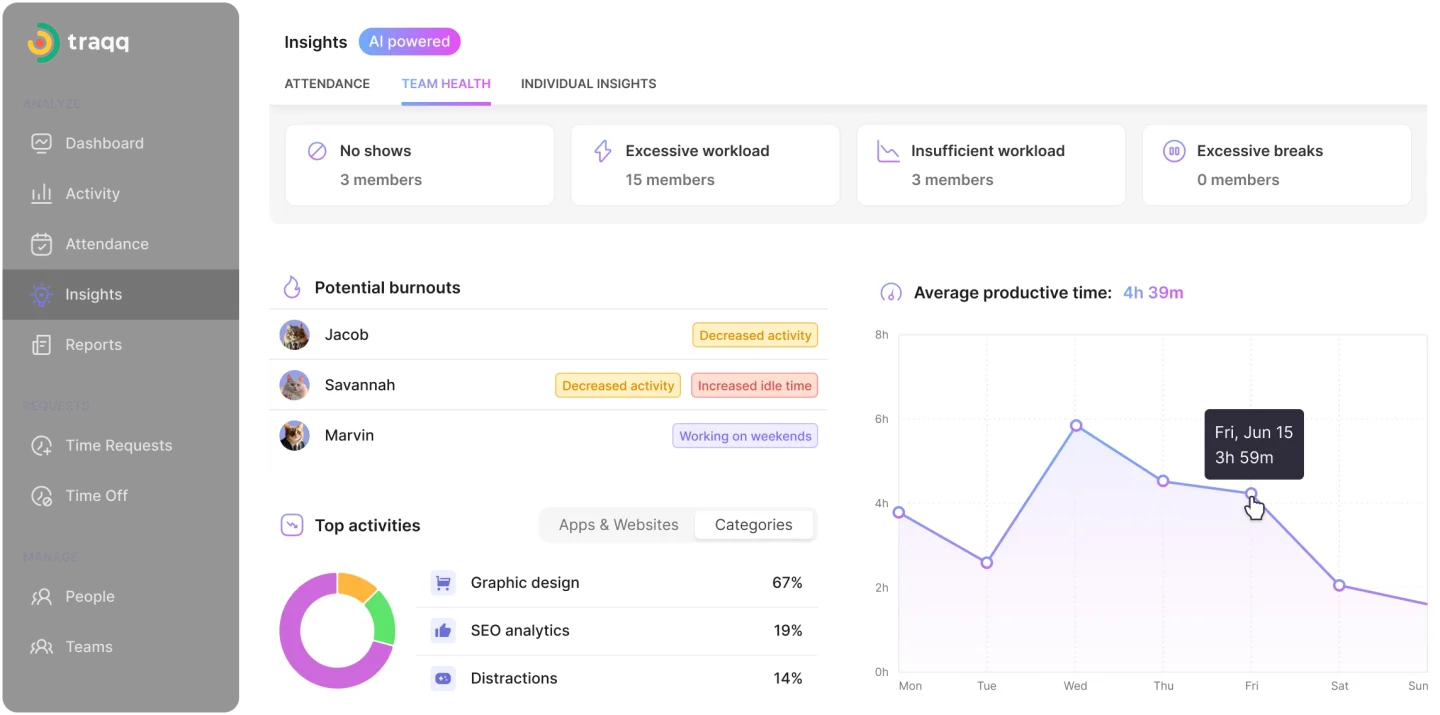
Built for Remote and Hybrid Teams
Whether tracking billable hours for the first time or fixing broken time tracking, this assessment reveals exactly how much revenue you lose—and shows you how to recover it.
YOUR money, your hidden gaps
See the revenue that gets lost in unbilled time, async handoffs, and coordination gaps
Takes just 3 minutes
Get instant insights in 3 minutes that would otherwise take hours in manual audits
Personalized results
Our assessment provides a clear overview of your current situation alongside easy-to-implement tips to see changes within weeks
Calculate Your Recovery Potential?
Get your personalized assessment and actionable recommendations in just 3 minutes
Why This Assessment Was Created
Based on data from companies in the US, Canada, and Europe with remote teams across 50+ countries.
- 92% experience limited visibility into how time is spent across distributed teams
- 44% say they have difficulty balancing workloads and spotting burnout risks early
- 31% lost billable time and inaccurate data for payroll and invoicing
- 29% complain about messy, manual timesheets that slow down approvals and reporting
- 65% have poor insights into project costs, profitability, and team efficiency
Backed by Data & Trusted by Thousands
Teams Using Traqq
Reported increased efficiency
Faster Project Delivery
Countries
Trusted by 40+ thousand users







FAQ
How do you implement time tracking software for remote employees?
You can implement time tracking in several ways. Some teams start with simple manual timesheets or Google Calendar entries, while others choose automatic software that automatically collects data in one workspace.
Can you track billable hours effectively?
Yes! Tracking billable hours has never been easier with software that logs time automatically. This way, clients have visibility over time and work done on their project, and employees have direct evidence of project work.
How do you track employee hours?
Teams already track hours many different ways. Manual timesheets, Google Calendar, spreadsheets, or other software.
What are downsides of not tracking time?
You lose visibility and are likely guessing if projects are on budget or if people are spending too much time on non-billable stuff. Some teams lose 15-25% of their billable time without even realizing it.
Do teams need a time tracking policy?
A simple policy just tells everyone the fair rules: why you’re tracking time, how it helps the team, and what information is (and isn’t) being collected.