Businesses turn to time tracking to reduce cost-eating waste and boost revenue. Accurate paychecks, better project costing, scope creep reduction, improved workloads, and productivity assessments. They are all revenue-improving results that time tracking can provide. But the problem is that some policies and tools can undermine the intention behind time tracking.
When employees feel monitored because of a company’s time-tracking policies or software, they find ways to work around the system. They also censor work and screen activity to protect personal information they feel may be under scrutiny. The result is a workforce that looks compliant on paper but produces badly contaminated and unreliable data.
That kind of poor data quality, according to Gartner, costs organizations at least $12.9 million on average annually.
That is why trust-based time tracking, one that easily addresses employee concerns about surveillance and autonomy, gives companies the best chance of achieving the promised results of time tracking.
This article shows why and how surveillance-leaning systems and practices skew time-tracking data and how trust-based policies solve the problem.
Quick Summary
- Ethical, or trust-based, time tracking measures work hours while respecting privacy, avoiding micromanagement, promoting transparency, and including workers in decision-making processes.
- Surveillance-heavy tools, such as time trackers that take screenshots, are more likely to produce inaccurate time-tracking data due to employee resistance.
- Employees adjust work behavior to fool time-tracking systems because they want to protect their data and look busy. This means organizations will work on data that does not reflect work realities.
- Monitoring also affects workers psychologically.
- Ethical practices that shore up trust ensure workers will embrace time tracking, since they don’t have to worry about privacy violations or micromanagement.
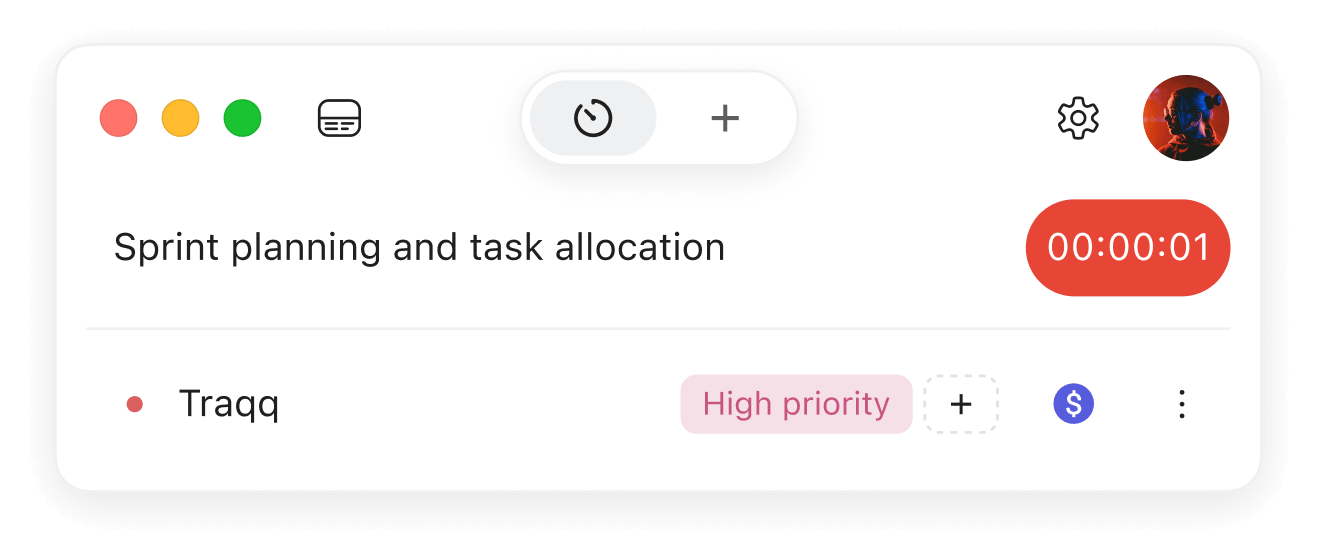
- Traqq is an ethical time-tracking tool that focuses solely on measuring work hours, shows workers and employers the same data, and allows managers to manually add or subtract time when employees provide details about off-device work.
What is Trust-Based Time Tracking?
Trust-based or ethical time tracking is the practice of measuring work hours without violating employee privacy, enforcing micromanagement policies, restricting employee access to collected data, or keeping workers away from decision-making.
It is the opposite of surveillance-based tracking, where employees are subjected to monitoring through screen recording, micromanagement, and sometimes keylogging.
Why Does Time Tracking Often Backfire and Produce Bad Data?
Because employees feel monitored and micromanaged. Let’s break down those reasons and how they affect revenue.
Surveillance redirects employee focus from work
Using a time tracker that takes screenshots, for example, keeps workers on their toes about the kind of personal data, such as banking information and private chats, that employers may collect.
So instead of focusing on work, they’re more occupied with editing what appears on their screens. That translates to reduced productivity, which means companies will be paying more for less output.
Micromanagement reduces productivity
Some companies enforce time-tracking policies that require workers to stay on-screen so their work hours can be logged, or work within specific time periods to align time zones. These enforcements can hurt performance and output because they prevent work routines and affect the team culture that keeps employees productive.
For example, workers who prefer to take handwritten notes or dismantle hardware for research purposes will be uncomfortable with a system that only rewards what time trackers report.
Workers can decide to stick to their work routines anyway and game the time tracker later. That means whatever productivity numbers the tracker reports won’t reflect reality.
Surveillance and micromanagement hurt workers psychologically
According to the American Psychological Association, 56% of workers who believe they’re being surveilled reported feeling stressed at work. That feeling of being watched, the constant mental gymnastics of censoring what appears on the screen or whether they’re working well enough, and the discomfort of working during fixed hours leads to the kind of psychological distress that makes workers disengaged.
And according to research, disengaged employees cost the global economy $438 billion annually.
Disengaged employees will leave
Per Gallup, low-engagement teams typically suffer 18% to 43% higher turnover than highly engaged teams. And replacing a departed employee can cost as much as 200% of their salary, depending on their position.
But that’s just the price tag for hiring, training, onboarding, and other processes to get a new person settled into the role. Indirect costs, which include difficult-to-calculate issues like productivity losses, the time a manager spends on recruitment, and poor customer service, show up one way or the other on any organization’s books.
Bad data sinks revenues
Making critical business decisions based on the type of data produced by employees who have dedicated their time to fooling time trackers will mean the following:
- Scoping projects on inflated productivity figures
- Using understaffed teams because the tracker suggests they are keeping up
- Spending more than necessary on labor because workers spend less time on work and more time on gaming the tracker and hiding personal information
- Billing clients more or pricing products too high due to the higher labor costs
- Missing project deadlines due to capacity plans built on manipulated output reports
- Underinvesting in training or tools because performance gaps never show up in the data
How Does Ethical Time Tracking Solve These Issues and Boost Revenue?
Ethical time tracking reverses the revenue-killing issues outlined earlier because employees will embrace time tracking when they don’t feel micromanaged or monitored.
When workers are engaged, companies see 23% higher profitability, 14% higher productivity, 78% lower absenteeism, and higher customer loyalty, according to Gallup research. CIPD also says engaged employees positively affect company innovation and knowledge sharing, both of which can do any organization’s bottom line a world of good.
Here’s a breakdown of how ethical time tracking makes workers rest easy and improves company finances.
Privacy is a priority
Ethical time tracking involves using tools that do not take screenshots, collect personal data like webcam feed or microphone input, log keystrokes, or capture metadata. Since workers won’t have to worry about their data going to places they don’t know, it’s one less reason to resist time tracking.
It also means employees will focus on work instead of guarding private information, which leads to better productivity than the alternative.
Employees get autonomy
Employees have the freedom to choose their work hours, and there are provisions to include hours spent on off-device activities. That means workers will not lose their best work routines, which translates to feeling at home in the company, producing their best work, not setting their sights elsewhere, and embracing the policy making all that happens.
Also, employers can measure organic output, especially how those unorthodox, off-screen activities affect productivity.
Transparency is baked-in
Organizations that go the ethical route use tools that show workers and their supervisors the same time-tracking reports and insights. They will also be upfront about why they collect the data and how they’ll secure it and involve workers during the decision-making process.
That way, the system becomes something everyone trusts. And since workers know why the data is being collected, they’ll also record time more honestly to help the organization achieve those goals.
Research has shown that transparency builds employee trust in management. And according to research by Great Place to Work, the 100 best companies outperform the U.S public market in revenue per employee by 8.5 times because they have higher employee trust, among other things.
Meaningful feedback is part of the process
Because workers can see the same data as employers, they can flag errors and help managers make corrections to preserve data integrity.
How Does Traqq Support Trust-Based Time Tracking?
Traqq does not take screenshots, log keystrokes or mouse movements, capture webcam feed, or record microphone input. It focuses on measuring work hours by sensing how long interactions with a mouse, keyboard, stylus, or touchscreen last.
The time-tracking app also displays data in the same format for employers and employees.
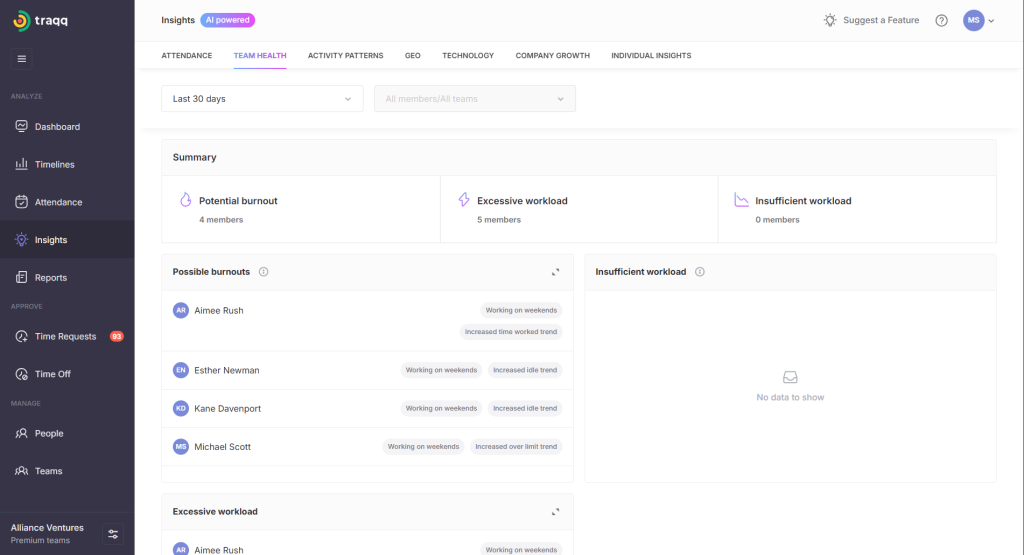
It provides regular time-tracking data and deeper work insights, such as peak work hours, active and idle time, app and website usage durations, and other AI-powered reports, like underutilized workers, overloaded employees, and potential burnout.
Conclusion
Accurate time-tracking data provides valuable insights that can help companies cut waste and make decisions that improve revenue. But employee cooperation determines whether the data is accurate, and, as explained, resistance to time tracking can render it unusable.
Trust-based time-tracking secures employee buy-in by removing the reasons for resistance. Ethical tracking also ensures the data passes through tests because employers and employees see the same data, and either party can share feedback when they notice errors.
FAQs
What is trust-based time tracking?
Trust-based time tracking involves recording employees’ work hours while respecting their privacy and granting them nearly the same freedom as untracked workers, especially in remote work environments. It is also called ethical tracking, and organizations that practice it also show workers the data they collect, explain why the policy is being implemented, and include workers in decision-making processes.
How does surveillance-based time tracking hurt businesses?
Because workers disengage from work and often suffer psychological stress when they believe they are being monitored. That disengagement leads to lower productivity, which translates to lower revenues. Surveillance-heavy environments also experience high turnover, and losing one employee can cost as much as 200% of that employee’s salary.
Why do employees resist time tracking?
Because they feel like they are being watched or do not trust the company’s explanations about the policy. Some workers also find ways around time-tracking systems when companies base performance reviews on time-tracking reports alone.
What does employee disengagement actually cost a company?
Disengagement drives employees to leave companies, and as mentioned, one personnel loss can cost an organization up to 200% of the departed employee’s salary, depending on the role. Other costs include losses in productivity and innovation, higher labor costs since employees will work more and produce less, poor customer support, and reduced product or service quality.
How does ethical time tracking improve profitability?
Ethical time tracking secures employee buy-in and reduces issues like disengagement, mental distress, and lost workplace trust. Research has shown that when each of these factors is improved, companies are better positioned to make more money.
What kind of data does a trust-based time tracking system generate?
Clock-in and clock-out timestamps, app and website usage, peak daily, weekly, and monthly work periods, activity levels, idle work hours, and productivity patterns. Some time trackers can also use measured work hours to generate reports, such as underutilized and overburdened workers, weekend work rate, and nighttime work.
Do screenshots help time-tracking accuracy?
No. Time trackers do not need screenshots to accurately calculate work hours. They detect input interactions through mouse, keyboard, touchscreen, and stylus activities to determine how long employees spend working.
Companies that deploy screenshots want to see what appears on their workers’ screens.
How does Traqq approach time tracking?
Traqq does not take screenshots or collect personal data. It uses the traditional method of detecting user-computer interactions to determine how long work sessions last.